Landscape Photography
The Complete Moorland Photography Checklist: 15 Shots to Try in Every Season
Nothing on a moor holds still for you. Cloud moves, light shifts, water rises, and heather that looked copper in October is grey-green by March. A fixed shot list helps. Not as a rulebook, but as a set of prompts that gets you out of the car and further up the track than you meant to go. Here are fifteen shots worth chasing across the year, grouped by the seasons and conditions that make them work. Take the ones that fit the forecast and let the rest wait.
Winter and Early Spring: Hard Light, Soft Detail
Short days and a low sun make these months the best time for atmosphere, if you can stand the cold. Watch for still, clear nights followed by calm mornings.
1. Dawn mist on the valley floor
Mist pools on still, cold nights and burns off within an hour of sunrise. Get to a high viewpoint before first light and work as the sun strikes the tops rather than the valley. Expose for the brightest mist and let the ridges fall nearly black. A 70–200mm lens stacks the layers into bands.
2. Frost and ice detail
When the ground freezes hard, the small things become the subject: ice crystals on sphagnum, frosted heather sprigs, a skin of ice across a peat pool. Macro lens, f/8 to f/11, tripod set very low. Your breath will fog the front element, so work from the side and keep a cloth in a pocket.
3. Snow lines on gritstone edges
Fresh snow followed by a clear day turns every edge into a graphic line. Look for the boundary between white moor and black rock or drystone wall, and use a telephoto to stack one ridge behind another. Snow fools your meter, so add roughly a stop of exposure compensation to keep it white rather than grey.
Spring: Green, Water and Returning Birds
4. Cotton grass in the bog pools
From late May the heads glow when backlit. Kneel or lie at water level with a wide lens so the cotton grass sits against sky and reflection; f/11 keeps near heads and far ridge sharp together. Waterproof boots, and test the ground before you commit — bog is wetter than it looks.
5. Waders among the rushes
Curlew, lapwing and snipe return to breed, and they photograph best in their habitat rather than cropped tight. A long lens, 1/1000sec for birds in flight, and patience at distance beat creeping closer. Stay on paths, keep dogs on a lead between March and July, and never approach a nest or chick for a picture.
6. The first green after rain
Bright overcast light after rain is ideal for unfurling bracken, new birch leaves and wet gritstone. Shade suits this subject: colours saturate without the contrast problems of direct sun. A polarising filter cuts the sheen on wet rock and deepens the greens.
Summer: Heather, Long Light and Shadow
7. Heather in full flower, wide
Flowering peaks between late July and mid-August, later on high ground. Backlight at either end of the day turns the flowers a luminous magenta. Build the frame in three layers — foreground heather, a wall or ridge, then cloud — and focus a third of the way in at f/11 to f/16.
8. Heather close-up with bees
The same flowers reward a macro lens. Cloud or a hand-held diffuser keeps the colour from clipping. Use 1/1000sec to freeze bumblebees, and pre-focus on a promising flower head instead of chasing insects around. Kneel on a mat; heather is brittle and slow to recover.
9. Low sun and shadow lines
Summer evenings give long raking light and shadows that draw lines across the moor. Ridges, sheep, lone pines and gateposts all make silhouettes. A telephoto compresses several ridges into one frame — wait for the sun to drop below the cloud base before you shoot.
Autumn: Colour, Mist and Water
10. Mist inversion from a high edge
Cool, still autumn mornings often leave the valleys full of cloud with the tops clear. Walk up above it and shoot into the sun for a bright layered scene, or turn away for a softer blue-grey version. Bracket your exposures; the range between bright cloud and dark moor is wide.
11. Bracken colour and minimalism
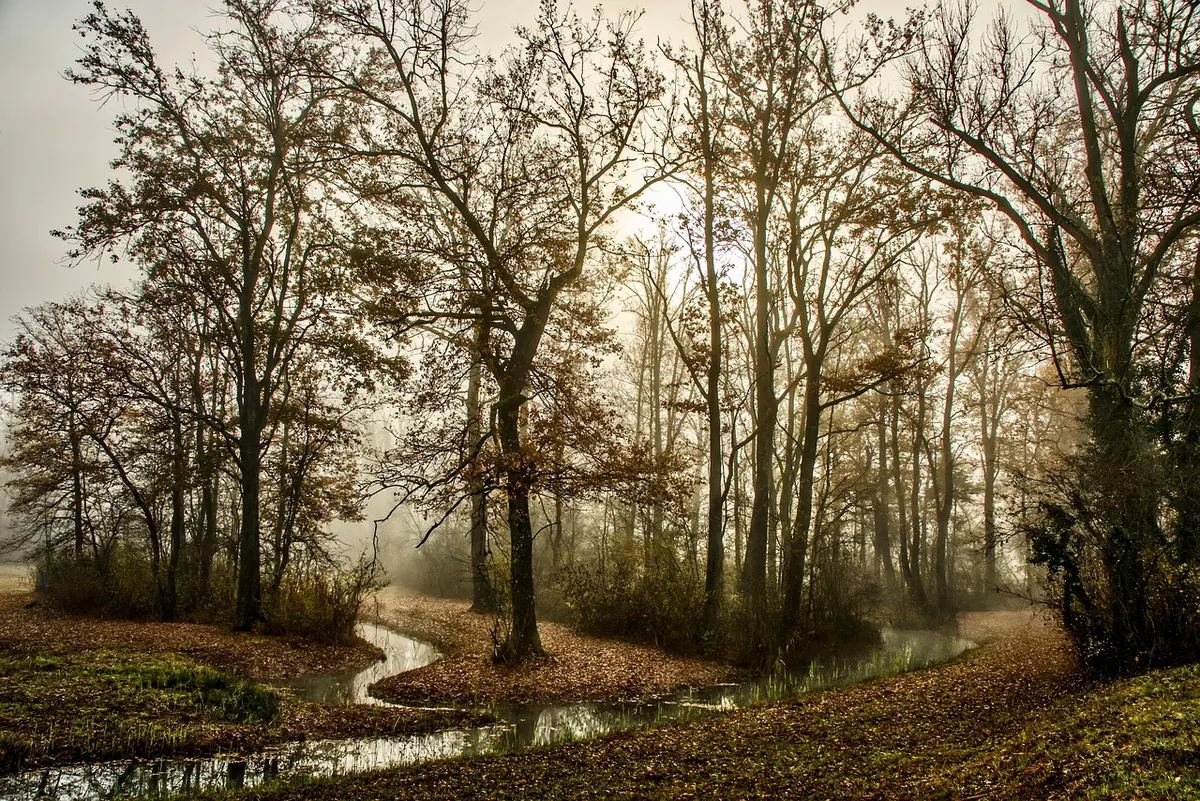
Rust bracken, dark heather and grey walls give strong colour blocks in October. Fog is your friend: find one lone tree, gatepost or standing stone and let everything else disappear. Simple compositions hold up better than busy ones when visibility is poor.
12. Peat-stained streams, long exposure
After rain, moorland streams run black and fast through red-brown channels. A tripod, a polariser and a two-to-six stop ND filter let you stretch the water into a smooth ribbon at a couple of seconds. Anchor the shot with a boulder or a clump of rushes in the foreground.
Any Season, Any Light
13. The upland night
On a clear, moonless night a moor is genuinely dark, which is rare and worth the walk. A fast wide lens, a sturdy tripod and manual focus on a bright star will give you a sky full of them; add a lit wall or lone tree for scale. Take a headtorch with a red setting, and tell someone your route.
14. Weather drama
Squall lines, rain shafts and rainbows happen all year and are the reason moorland skies look the way they do. Work from shelter, keep a cloth over the lens, and shoot towards the clearing edge where sun meets rain. Underexposing slightly keeps the mood in the cloud.
15. Human traces
Boundary stones, shooting butts, old tracks, ruined walls and small quarries record how the moor has been used. Photograph them at an angle rather than straight on, with context around them, in low side light so the textures read. These frames often mean more later than the pretty ones.
A Field Routine That Saves Shots
Most missed photographs on a moor are missed before the camera comes out. A short routine keeps the day productive when the weather turns.
- Check wind speed and direction as well as rain. Wind decides whether mist stays, where midges gather, and whether a tripod is usable at all.
- Decide on two or three shots from the list above before you leave, and note the light they need.
- Arrive forty-five minutes early. The best ten minutes usually come before the obvious moment.
- Work one composition properly: move left and right, go lower, change lens. Ten minutes on one frame beats twenty rushed ones.
- Check the histogram, not the screen. Bright mist and dark peat both mislead in the field.
Write down the three frames you came for before you leave the car. Everything else is a bonus.
One last thing: moorland weather changes faster than the forecast suggests. Carry waterproofs, a map and a charged phone, expect patchy signal, and be ready to turn back. The shots will still be there next week.
Photo: Matheus Bertelli / Pexels
Related Articles